Upsonic Agent Platform
We continue to expand our platform, which includes ready-to-use agents built specifically for fintechs and banks. Agents for merchant onboarding, risk scoring, email classification, and more are already running on the platform.
Featured Improvements
Merchant Onboarding Agents
In addition to standard documents such as signature circulars, tax certificates, identity documents, trade registry gazettes, proof of address, and invoices, attendance sheets can now also be successfully processed on the platform.
We have also introduced support for a partial onboarding structure. This means you no longer need to wait for the full document set to be completed before receiving results. Instant outputs can now be generated based on a single document.
For example, the moment your field team receives a customer’s signature circular, they can immediately identify which shareholders are missing identity documents and request them while still on-site.
Risk Agents
We developed a risk scoring product aligned with Central Bank parameters. Both the parameters and their weightings can be customized according to your institution’s specific needs.
With our Web Crawling Agents, you can also analyze your merchants’ websites in depth, including:
products sold, MCC matching, pricing information, consistency between the company name in the contract and the declared business name, website traffic data, and much more.
Agent Framework
Our Agent Framework is a Python SDK designed to help developers at fintechs and banks build AI agents more easily. Our open-source agent framework, now with 7.5K stars, continues to grow. You can explore it here.
Featured Improvements
Autonomous Agents
With Autonomous Agent Streaming and Heartbeat features, autonomous agents such as OpenClaw can now be built on Upsonic. You can access the example video covering OCR, Autonomous Agents, and Interface features here.
Safety Engine
Our Safety Engine has been significantly strengthened, especially around PII policies, prevention of sending personal data to cloud models, and anonymization capabilities. You can watch the video here.
Interface
Agents you build on the framework can now be used directly through channels such as Telegram, email, and Discord.
Intelligent Document Processing (IDP)
We introduced a unified three-layer IDP architecture. We combined traditional OCR engines (such as EasyOCR and Textract), middleware tools (such as Docling and Markitdown), and both local and cloud-based model OCRs into a single structure.
Your teams no longer need to integrate these components separately. You can read the Medium article here.
UCP Support
We launched UCP support, one of the most critical building blocks of agentic commerce. It makes it possible to manage the entire commerce journey — from product discovery to purchase and post-purchase workflows — through a single standard.
With Upsonic’s UCP support, your agents can now discover products on behalf of users, manage carts, and complete purchases end to end. You can access the documentation here.
Partnerships We Completed This Month
We completed our vector search integration with Qdrant. You can now use Qdrant directly on Upsonic for semantic search and memory management. You can find Qdrant’s post on the topic here, and the Upsonic example usage here.
We also completed our scraping integration with Firecrawl. It is now much easier to give your agents the ability to collect data from the web. You can find Firecrawl’s announcement here, and the Upsonic example usage here.
Webinars & Events
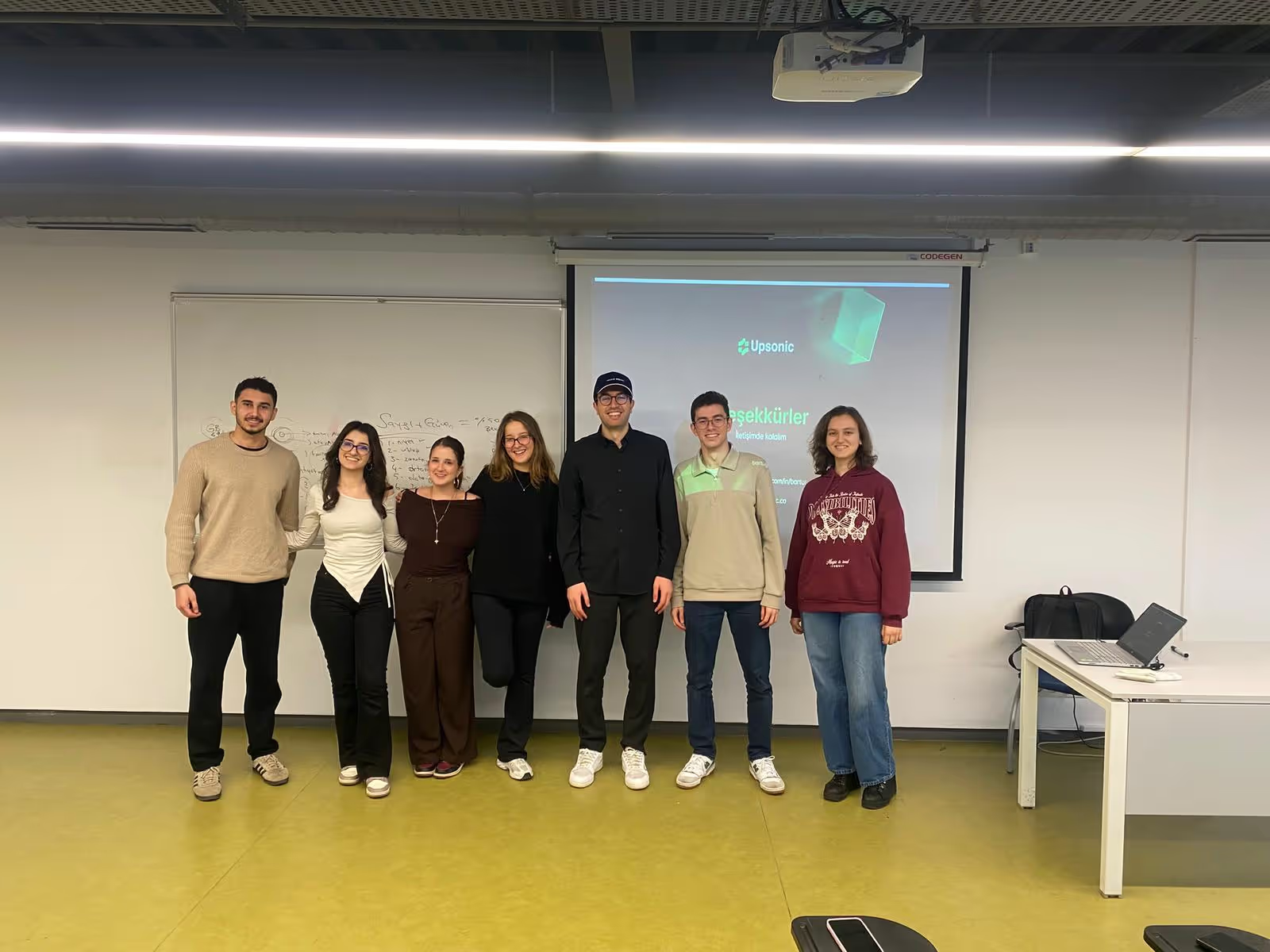
This month, we took the stage across many platforms, both technical and strategic.
In our webinar titled “Agentize Your Fintech: How, Where and Why”, we explained how agentic transformation should be implemented in fintechs. If you missed it, you can access the recording here.
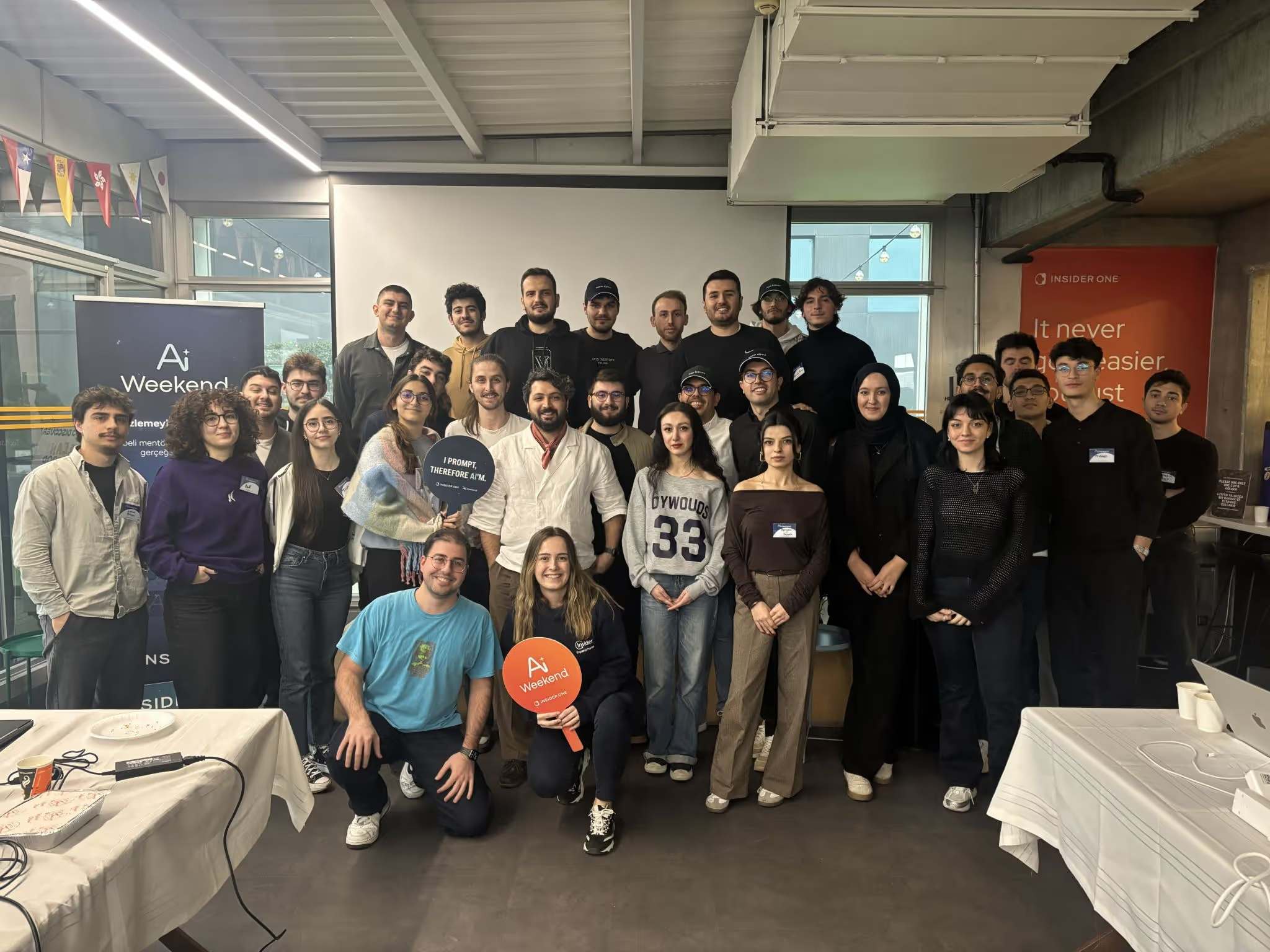
At the Insider One AI Weekend event, we focused on team agents, discussing how multiple agents can work together in coordination and how this structure can be integrated into real business processes.
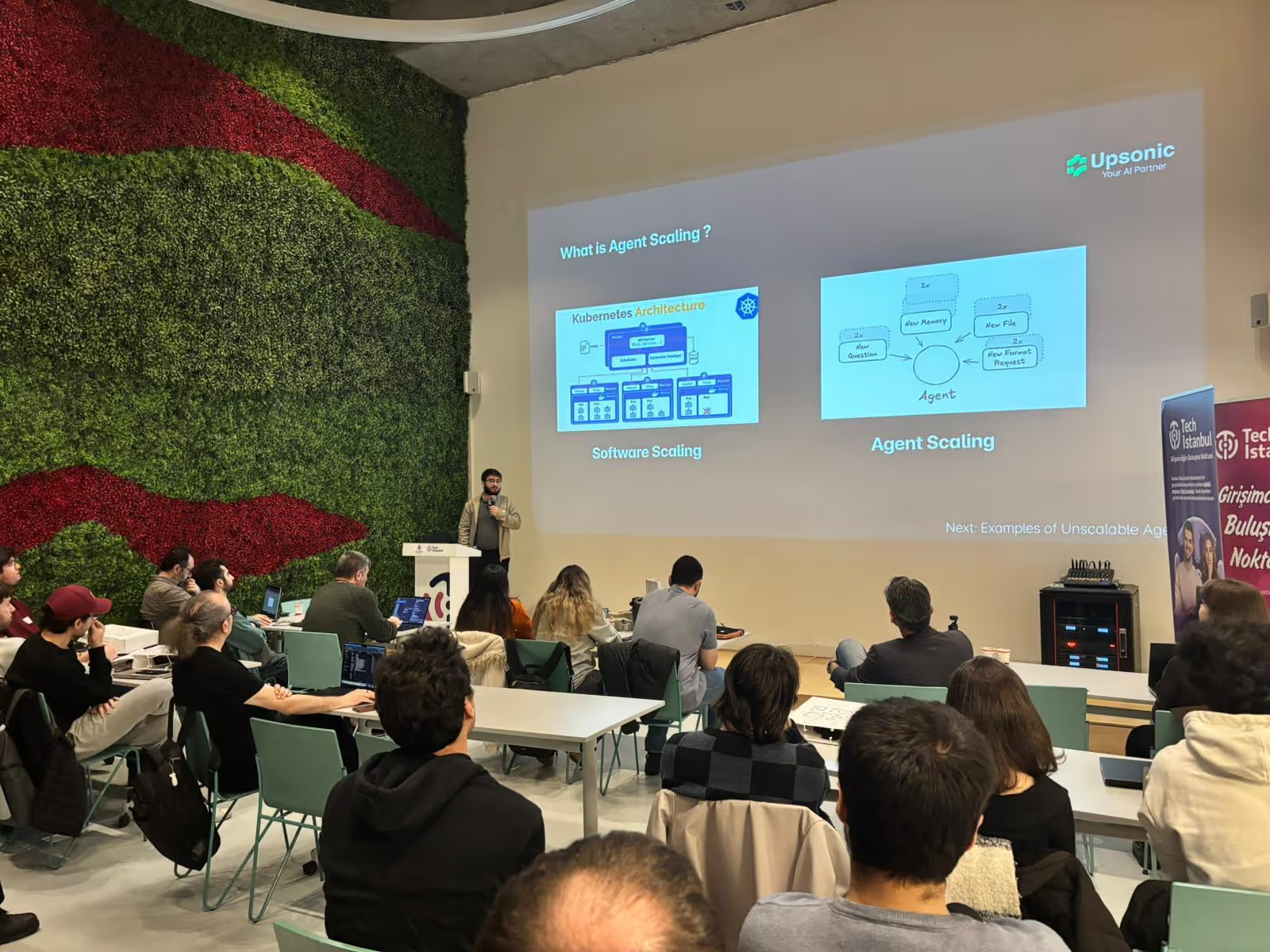
Within the Java Developer community, we focused on agent development practices. We shared how developers should approach agent architecture and what kinds of design decisions they need to make.
At ITU Future Days, we spoke about AI-supported business model design. We explored how artificial intelligence can be positioned not only as a tool, but at the very center of the business model.